
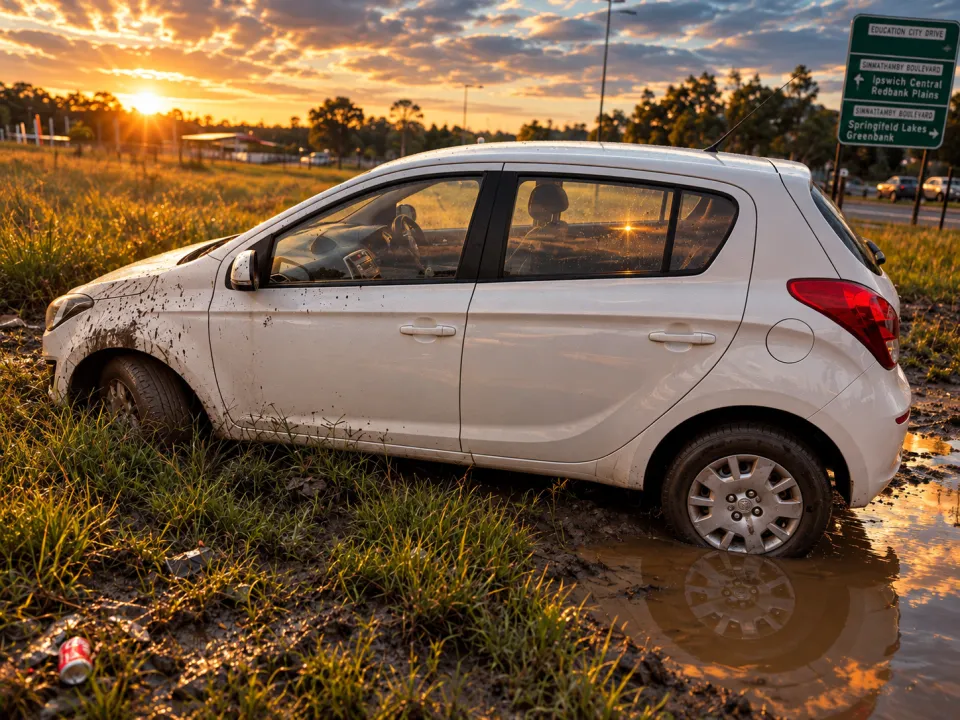
If the road is flooded, blocked or unsafe, do not attempt to cross it and do not try to recover the vehicle yourself. If anyone is at risk, call emergency services first. Towing should only be arranged when the vehicle is in a safe and accessible location.
First: get yourself and passengers safe
If your car breaks down during heavy rain in Brisbane, deal with people before the vehicle. Turn on your hazard lights, slow down carefully and move to the safest practical location if the vehicle can still be moved without creating more danger.
If you are on a motorway, bridge, narrow shoulder, busy arterial road, roundabout, intersection or low-lying road, be extremely careful about getting out of the vehicle. Stay away from moving traffic and avoid standing beside the car where passing vehicles may not see you in rain or spray.
If there is immediate danger, rising water, injury, a crash, a blocked live lane, fallen powerlines or emergency services activity nearby, call the correct emergency service or road authority first. A towing job can be arranged after the scene is safe.
Do not drive through floodwater
Floodwater can look shallow from the driver seat, but it can hide deep water, fast flow, potholes, debris, washed-out road surface and open drains. It can also stall the engine, damage electrical systems or move the vehicle if the water is flowing.
The safest decision is simple: if water is over the road, turn around and find another route. A shortcut through floodwater is not worth the risk to you, your passengers, emergency services or your vehicle.
If the vehicle has already entered water
If your car has been through deep water, stalled in water or may have taken water into the engine, avoid restarting it until it has been checked. Trying to restart a water-affected engine can create more serious damage.
If the car is now in a safe, dry and accessible location, arrange towing to a mechanic, dealership or workshop. If it is still sitting in floodwater or on a closed road, do not attempt recovery yourself. Wait for the area to be declared safe and accessible.
Common wet weather breakdown problems
Heavy rain can trigger or expose problems that were not obvious in dry weather. TowFast Brisbane commonly sees wet weather towing enquiries involving vehicles that will not start, vehicles with warning lights, water-affected electrics, flat batteries, damaged tyres after hitting hidden potholes, vehicles stuck in soft ground and cars stranded in car parks or driveways.
- Car will not start after heavy rain.
- Engine stalled after driving through water.
- Warning lights after wet weather driving.
- Flat battery or electrical issue.
- Damaged wheel, tyre or suspension after hitting a hidden pothole.
- Vehicle stuck in mud, wet grass or soft roadside ground.
- Vehicle stranded in a shopping centre, apartment or workplace car park.
When towing can help after heavy rain
Towing can help when the vehicle is safe to access but should not be driven. That may include a car that will not start, a car that has warning lights, a car with a damaged wheel, a vehicle that has been water affected, or a car that needs to be moved to a mechanic for inspection.
A tow truck should not be treated as a flood rescue service. If there is active floodwater, a dangerous road, rising water, fast-moving water, unstable ground, powerlines or emergency services restrictions, safety comes first and the vehicle may need to wait until conditions improve.
What to tell the towing operator
Wet weather jobs are easier to quote and plan when the details are clear. Before calling, collect the information you can safely provide.
- Exact pickup address, nearest cross street or safe landmark.
- Drop-off address, mechanic, workshop or home suburb.
- Vehicle make, model and registration if available.
- Whether the car starts.
- Whether it rolls, steers and brakes.
- Whether keys are available.
- Whether the vehicle has been through water.
- Whether there is water, mud, soft ground or restricted access around the vehicle.
- Whether the car is in a driveway, roadside, car park, underground garage or workshop.
- Photos of the vehicle and access area if it is safe to take them.
Be careful with underground car parks and shopping centres
Wet weather breakdowns often happen in shopping centres, apartment complexes, office car parks and underground parking areas. These locations can have low height clearances, tight ramps, narrow corners and limited room for loading.
If the vehicle is in an underground car park, tell the towing operator the clearance height, parking level and whether the car can be moved to an open loading area. Do not move the vehicle if doing so is unsafe or may cause more damage.
Where should the vehicle be taken?
If the car may be water affected, a mechanic or dealership inspection is usually the safest drop-off choice. If the issue is a flat tyre, battery, warning light, damaged wheel or non-starting vehicle, choose the most suitable mechanic, tyre shop, auto electrician or home address.
If the drop-off location is a workshop, check whether they are open, whether they can accept the vehicle and whether there is an after-hours key drop. That can prevent the vehicle being delivered to the wrong gate or a location where it cannot be safely left.
Useful official updates during Brisbane wet weather
Before travelling during heavy rain, check live updates from official sources. The Bureau of Meteorology provides weather forecasts, warnings, radar and rainfall information. QLD Traffic provides road condition and incident updates. Brisbane City Council also maintains an emergency dashboard for local alerts, road closures, power outages and service disruptions.
- Bureau of Meteorology Brisbane forecast
- QLD Traffic road conditions
- Brisbane City Council emergency dashboard
- Queensland Government floodwater safety advice
Need wet weather breakdown towing in Brisbane?
TowFast Brisbane can help with breakdown towing, car towing, non-drivable car towing, tilt tray towing and vehicle transport across Brisbane and surrounding South East Queensland areas where conditions are safe and access allows.
If the vehicle is safe to access, call with the pickup location, drop-off location, vehicle type and condition. If the vehicle is near floodwater, on soft ground or in a restricted-access area, send clear photos if it is safe to do so.
Frequently asked questions
Can a tow truck come out during heavy rain?
A tow truck may be able to help during heavy rain if the pickup location is safe and accessible. If there is floodwater, fast-moving water, fallen powerlines, blocked roads or emergency services activity, safety comes first and the job may need to wait until conditions are safe.
What should I do if my car is stuck in floodwater?
Do not enter floodwater or try to recover the vehicle yourself. Move to a safe location if you can do so without entering water and call emergency services if anyone is at risk. Towing should only be arranged once the area is safe and accessible.
Should I start my car after driving through deep water?
If the vehicle has been through deep water or may have taken water into the engine, avoid restarting it until it has been checked. Starting a water-affected engine can cause more damage.
What details help with a wet weather towing quote?
Provide the pickup location, drop-off location, vehicle make and model, whether the vehicle starts, whether it rolls, steers and brakes, whether keys are available, and whether there is floodwater, mud, soft ground, underground parking or restricted access.