

Quick answer
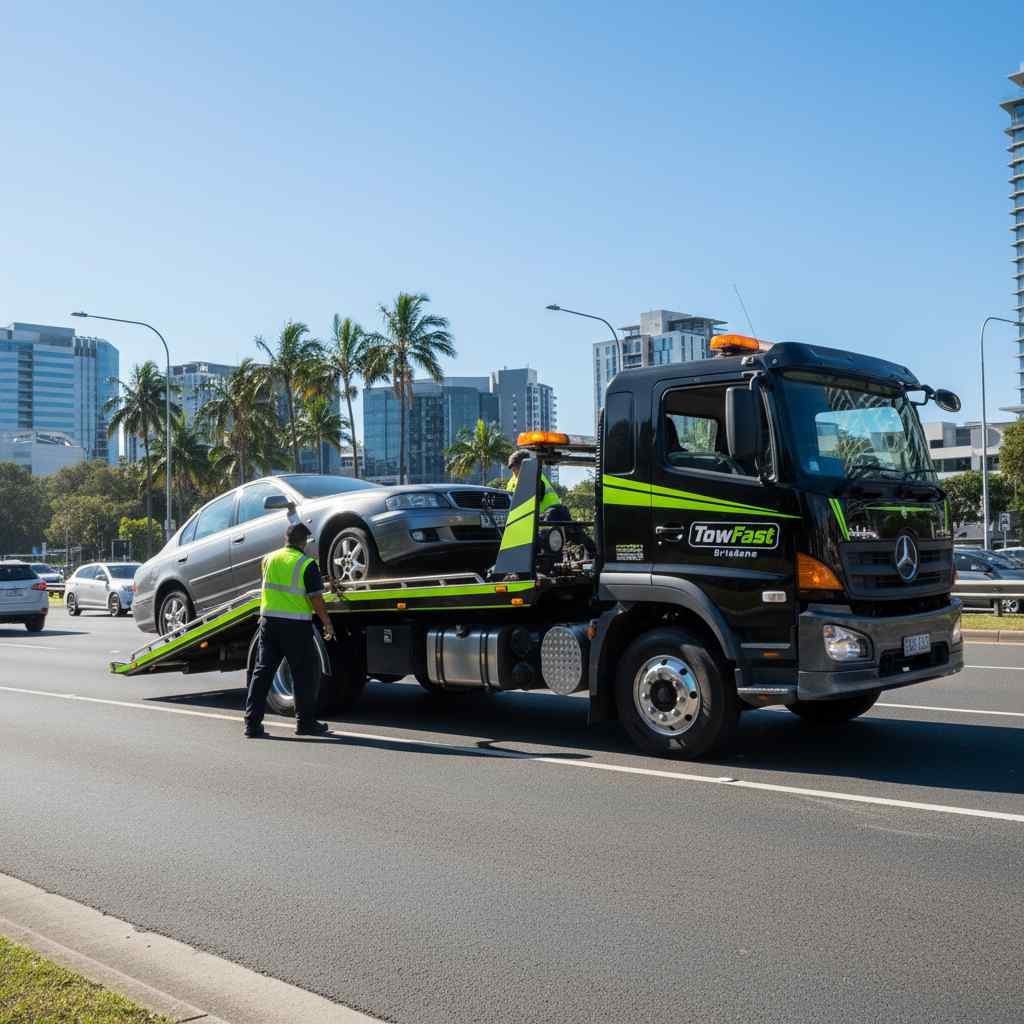
A tilt tray tow truck carries the whole vehicle on the tray. This can be useful for cars that should not be driven, non-running vehicles, lowered cars, prestige vehicles, machinery, trailers and jobs where stable loading is preferred.
A normal tow truck may be suitable for some simple towing jobs, but the best option depends on the vehicle condition, loading access and drop-off requirements. If the vehicle does not start, does not roll, has low clearance, has wheel damage or needs careful transport, tilt tray towing may be the better choice.
Call 0434 869 062 with your vehicle details, pickup location and drop-off location.
What is tilt tray towing?
Tilt tray towing uses a tray that tilts down so the vehicle can be loaded onto the back of the truck. Once loaded, the vehicle is carried on the tray instead of being pulled with wheels on the road.
This is why tilt tray towing is commonly used for vehicle transport, breakdown towing, non-drivable vehicles, prestige cars, lowered cars, auction pickups, workshop transfers and vehicles that need extra care.
When tilt tray towing is usually the better option
Tilt tray towing can be useful when the vehicle needs stable loading or should not be driven any further. This includes situations where the car has mechanical issues, damage, low clearance or cannot move safely under its own power.
- Non-drivable cars that do not start, roll, steer or brake properly.
- Lowered cars or prestige vehicles where clearance is important.
- Vehicles with flat tyres, wheel damage or suspension issues.
- Cars being moved to mechanics, workshops, dealerships or private addresses.
- Private sale pickups and planned vehicle transport.
- Machinery, trailers or special transport jobs where suitable.
When a standard tow may be enough
Some towing jobs are simple. If the vehicle is easy to access, rolls properly, has no major clearance issue and only needs a short move, a standard towing option may be suitable depending on equipment availability.
However, if there is any uncertainty about the vehicle condition, clearance, loading angle, access or safety, it is better to explain the situation clearly before the truck is dispatched.
Tilt tray towing for lowered or prestige cars
Lowered cars and prestige vehicles need extra care because clearance can be limited. The wrong loading angle or rushed approach can increase the risk of scraping bumpers, splitters, side skirts or underbody components.
If your vehicle is lowered, modified, high-value or has special loading needs, mention this early. Photos can also help. Send clear photos of the vehicle, front clearance, driveway angle and pickup area if the job is unusual.
Tilt tray towing for non-running cars
A car that will not start can often still be moved, but the towing operator needs to know whether it rolls, steers and brakes. A vehicle with keys available and wheels that roll freely is easier to load than a vehicle with locked steering, no keys, flat tyres or seized wheels.
If the vehicle is in a garage, underground car park, narrow driveway, apartment complex or blocked in by other cars, that access information matters. It helps confirm whether the job can be completed safely and what approach is needed.
Access matters as much as the vehicle
The right towing option is not only about the vehicle. Access can change the job completely. A car on a wide flat driveway is different from a car in a tight basement, steep driveway, busy street, low-clearance car park or shopping centre loading area.
Before booking, tell the towing operator if there are height restrictions, steep ramps, tight corners, locked gates, soft ground, narrow streets or limited room for the truck to line up.
What details to provide before booking
The more accurate your information, the easier it is to quote and dispatch the right towing option.
- Pickup address or suburb.
- Drop-off address or suburb.
- Vehicle make, model and type.
- Whether the vehicle starts.
- Whether it rolls, steers and brakes.
- Whether keys are available.
- Any low clearance, modifications or body kit.
- Any flat tyres, wheel damage or suspension damage.
- Access issues such as basement parking, tight driveways or steep ramps.
- Preferred timing — urgent, today or scheduled.
Does tilt tray towing cost more?
Pricing depends on the job. Distance, vehicle condition, access, loading difficulty and timing all affect the quote. A simple local move is usually different from a non-running car with no keys, difficult access or a longer transport distance.
For general guide pricing, read the Brisbane towing cost guide.
Need tilt tray towing in Brisbane?
TowFast Brisbane helps with tilt tray towing, breakdown towing, car towing, vehicle transport and non-drivable car towing across Brisbane and surrounding South East Queensland areas by availability.
Frequently asked questions
What is the difference between a tilt tray and a normal tow truck?
A tilt tray carries the whole vehicle on the tray, while other towing methods may lift part of the vehicle. A tilt tray is often preferred for non-drivable cars, lowered cars, prestige vehicles and careful vehicle transport.
When should I use tilt tray towing?
Tilt tray towing is useful when the vehicle is non-drivable, has low clearance, has wheel or steering issues, needs careful loading, or should be transported without being driven.
Is tilt tray towing good for lowered cars?
Yes. A tilt tray can be a better option for lowered vehicles, prestige cars and vehicles that need careful loading, depending on access and clearance.
Can a tilt tray tow a non-running car?
Yes. A tilt tray can often move non-running vehicles, but the towing operator needs to know whether the vehicle rolls, steers, brakes and has keys available.
What details should I provide before booking a tilt tray?
Provide pickup address, drop-off address, vehicle make and model, condition, whether it starts or rolls, access issues, clearance concerns and preferred timing.